By Sovereign Chronicles
The claim, as it circulates
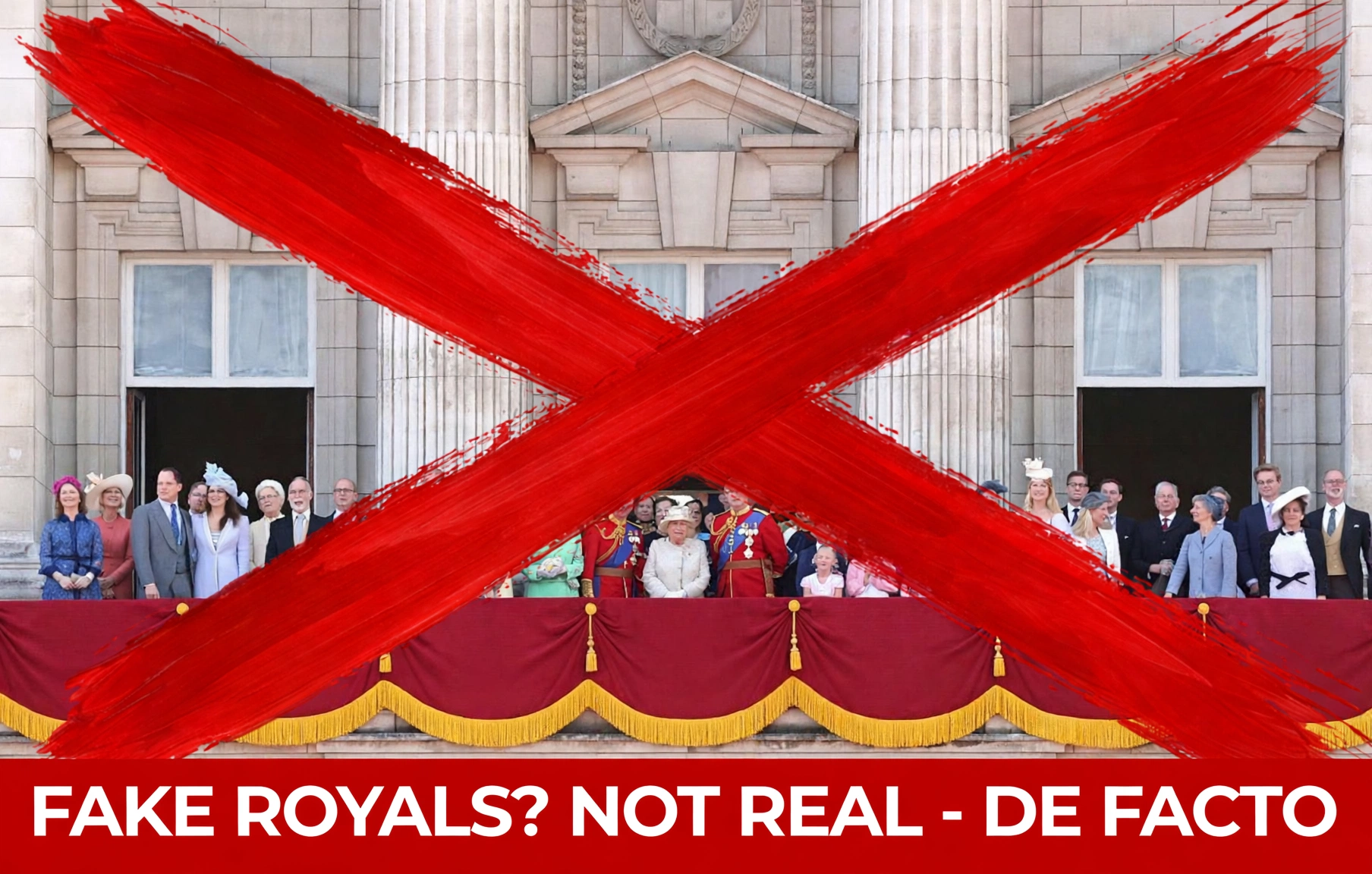
A popular creator told his audience this month that the Rothschilds are Black — swarthy — and that the switch was intentional: that a dark family stands behind the pale name the world knows. The video — “SWARTHY GERMAN TRILLIONAIRE FUGGER FAMILY HIDING BEHIND PALE SERVANTS,” by Patterns Not Coincidences, posted October 3, 2026 — opened on the Fuggers of Augsburg, but the claim it carries is the one now travelling everywhere: the great German banking house was a swarthy family, and the whitening was done on purpose, by changing the names. The video: https://www.youtube.com/watch?v=plotf_9UNwQ
What the video says, from its transcript. He argues from the Fugger “book of honours” (the Ehrenbuch), which he says sits in the Library of Congress: that the family arms repeatedly show a crowned, dark-featured woman holding a bishop’s crozier, while the named male portraits wear plain hats — the real Fuggers, in his telling, are dark-skinned Europeans presented to the world through pale stand-ins. Along the way he states, as fact, the documented parts: Fugger copper operations in Bohemia and Hungary and a monopoly over the copper trade (about 1:36–1:50); Fugger financing of Maximilian I and of Charles V’s election as emperor (about 2:28); a “Prince Fugger von Babenhausen,” died 1979, and Babenhausen Castle named as a Fugger property (about 26:51 and 31:26–37:27). The video carries no bibliography and cites no sources.
A note on this report. The views expressed in the referenced video are the creator’s own, and not every claim in it is accurate — some could not be verified against any record, and this article says so where that is the case. Readers should also know the video and this article discuss period propaganda, including racist caricature, which some audiences will find disturbing. Sovereign Chronicles is verifying specific claims from the video against the documentary record. What follows is that verification — the parts that hold, and the parts that do not.
This house does not repeat claims. It checks them. So: let’s verify, and let’s look at the record — because parts of this claim touch paper that anyone can pull, and parts of it collapse the moment the paper is pulled. Both halves deserve print.
What the record shows about how they were depicted
Start with the characters — the caricatures. In Paris in 1899 and 1900, a series of posters called the Musée des Horreurs rendered the famous Jews of the Dreyfus era as dark, animal hybrids. Baron Alphonse de Rothschild appears — twice — his head on the body of an octopus, catalogued today by the United States Holocaust Memorial Museum. His relatives appear across the series: Karl Mayer, Charlotte, and James — No. 44, “Le baron James,” his face on a crouching dog hoarding sacks of money, in the same Museum’s catalogue. The German scholarship carries the same record: Klaus Herding’s “Die Rothschilds in der Karikatur” (1996) is the standard study of how this family was drawn. The Museum’s own note says the family had no part in the Dreyfus scandal at all; they were targeted for their prominence. The posters are propaganda — that is exactly what makes them evidence. They are the period’s own record of how this family was seen: dark, foreign, other. A description is not a birth record, and this article does not pretend otherwise. But when a claim says a family was depicted as swarthy in its own century, the depictions are the first exhibit, and they exist.
The quotes travel with the caricatures — and here this article can put a verified one on the record. J. A. Rogers, the Jamaican-American historian who spent four decades collecting the descriptions Europe left of itself, wrote in Nature Knows No Color-Line (1952), citing the anthropologist James Cowles Prichard and the Duchess d’Abrantes, Napoleon’s ambassador’s wife: “So dark were the Jews, especially of Portugal and Southern Spain that many whites thought all Jews were black or dark.” Rogers wrote of the German lands too — of Karl Marx, whose “color so dark he was called ‘The Moor,’” and of the black pages kept in the houses of the nobility, who “usually married into white families” and are found “throughout Europe as far north as Russia.” That is Rogers’ real text, page 123 and pages 130 to 131, and it establishes the ground the claim stands on: in the centuries that made the Rothschilds, darkness in European and Jewish families was described in print, by name, at the level of courts and noble houses — not invented by the internet.
Other quotes travel with the caricatures that do not survive checking, and this house prints the checking with them. A passage attributed to Virginia Cowles’s The Rothschilds: A Family of Fortune (1973) describes a Bertha, “daughter of Mayer Amschel,” as of “swarthy, Moorish complexion.” The Rothschild Archive’s own index, read in full, lists Mayer Amschel’s daughters — Jeannette, Isabella, Babette, Julie, Henriette. There is no daughter Bertha. A second line, “The Rothschilds, a family of swarthy Jews,” is attributed to an Australian newspaper on the Trove archive; the article itself has not yet been read at source. Both quotes stand in this article labelled what they are — unverified — because a house that checks claims checks its own side first.
The switch was real — and it was law
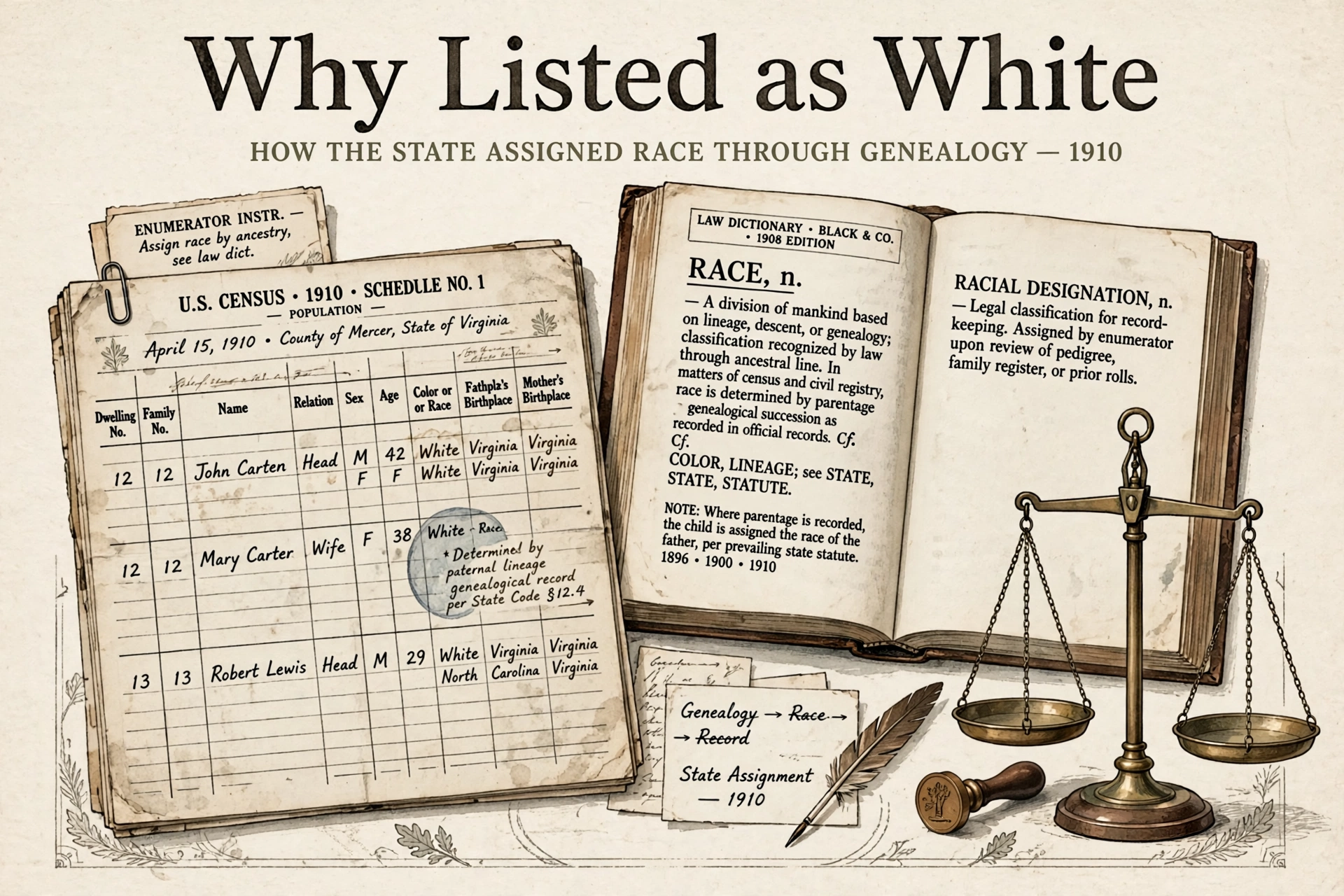
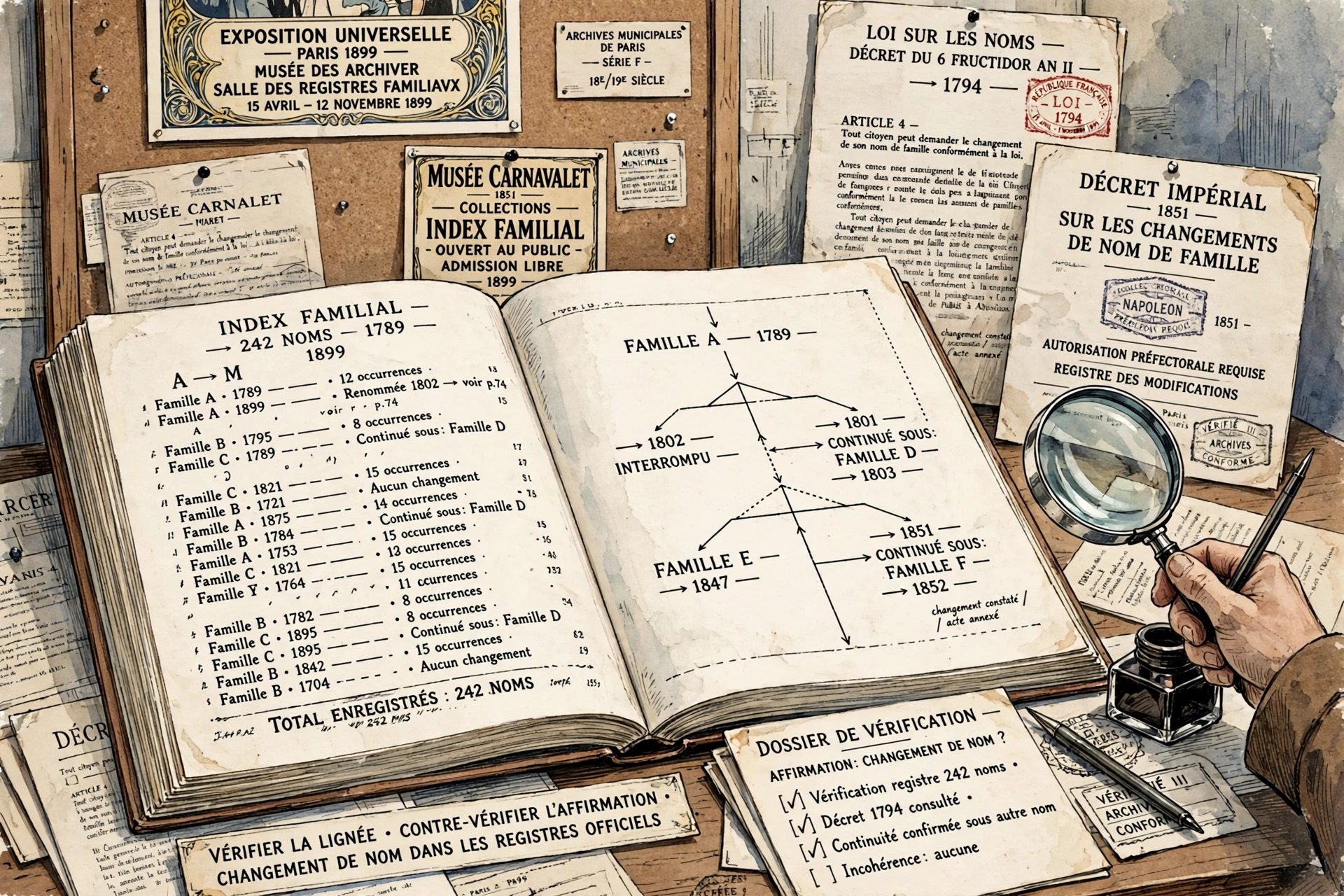
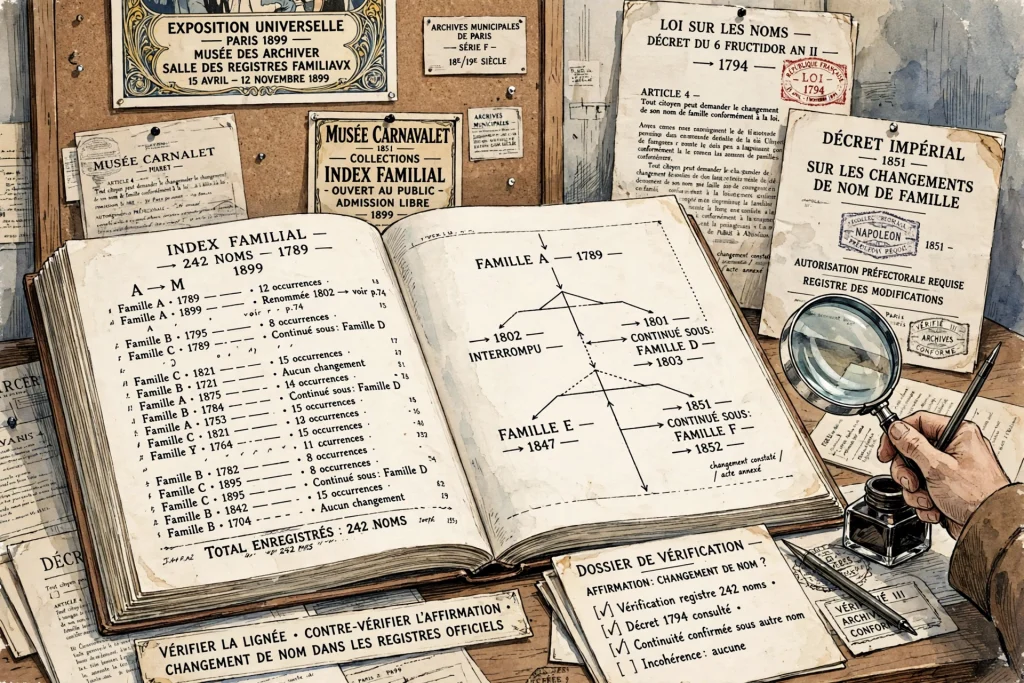
On the name-switching, the record is not rumour; it is statute. Jewish families in the German lands did not drift into new surnames — they were ordered into them. In 1787, Joseph II’s patent required Jews in the Habsburg lands to adopt fixed, German surnames, registered with the state. In 1808, Napoleon’s Bayonne decree imposed the same requirement across his sphere: fixed family names, declared and recorded. Prussia followed in 1812. Mayer Amschel himself was born in Frankfurt’s Judengasse in 1744, under the legal restrictions of the ghetto — the documented root of the house, a generation before the five branches dispersed to Frankfurt, Vienna, London, Naples, and Paris. Whatever else is argued about this family, this much is law on paper: in their world, names were assigned, changed, and registered by governments, and a family’s name in one century is not proof of its name in the next.
And the seizures stand in the same record. In April 1919, the new Austrian republic passed the Habsburg Law — exiling the Habsburg-Lorraine house and expropriating its property to the state. It is the standing example of what happened to great houses when states moved against them: the property did not evaporate; it was taken, by law, in writing. Houses that survived such centuries survived them the way houses always have — through trusts, entails, marriages, and names that moved.
Name-switching is not even a hidden practice. In 1917, in the middle of a war, George V renamed his own house by royal proclamation — Saxe-Coburg and Gotha became Windsor, in public, for politics. The Trump family name was Drumpf before it was Trump. This article mentions the Windsors and the Trumps for one reason: so no reader can pretend a famous name is a fixed thing. Names change — by law, by proclamation, by choice. The question is never whether names switch. It is what a particular switch was, and what the record shows underneath it.
The method, briefly
Here is how this house tested the claim, in the open. We took the Rothschild Archive’s published family index — 242 named persons — and ran every name against Rashida’s documented family lines across nine houses, under fixed rules declared before the counting: every given-name form, every translation, every interchange in the family’s naming key, run under every surname in play, with matches reported by position — generation and household slot — not by presence alone. That is the whole method. It is the results that matter.
The results
Of the 242 persons in the Archive’s index, 155 — 64.0 percent — carry a name that appears in her family’s documented name pool. Ninety-one of the 242 — 37.6 percent — match person for person, name paired with the same name in the same family position: 261 matched pairs in all. Her lines hold 481 names across the nine houses against the Archive’s 242.
And then there is the shape of the tree itself — her observation, and the finding this claim may actually rest on. Look at the matching lines on the published tree: again and again, the line stops. No descendants printed under them. Her reading, stated as hers: those are the swarthy ones — the branches whose descendants did not disappear but continued elsewhere, under other names, on the far side of the switches the law itself imposed. The desk’s test note stands beside it, in the open: the printed tree is mixed — some matched lines do continue in print — and a full truncation count is runnable from the Archive index whenever she calls for it. The possibility is not proven. It is, on the numbers and the statutes above, a possibility the record does not close.
The conclusion, in tiers
What the record shows: a family depicted as dark and foreign by the propaganda of its own era; a legal world in which Jewish names were changed by decree; great houses expropriated by law within living memory of the family’s height; and a name-pool overlap between the Archive’s 242 and one documented family’s lines that is too large to wave away and too loose, yet, to call proof of descent. What the record does not show: the two quotes in verified form, or a document that carries any single Rothschild line into any single Carolina household. What remains standing is the possibility the claim points at, restated the legal way: a family may no longer be found under the name Rothschild — not because it vanished, but because the names were switched, by law and by century, and the lines run on under the names that replaced them.
Proof. Genealogy. The legal way. That is where this house looks — and the looking continues.
Sources and further reading: Musée des Horreurs series, United States Holocaust Memorial Museum (Nos. 2, 43, 44, 45, 48); Rogers, Nature Knows No Color-Line (1952), pp. 123, 130–131; Herding, “Die Rothschilds in der Karikatur,” in Jüdische Figuren in Film und Karikatur (1996); Joseph II surname patent, 1787; Decree of Bayonne, 20 July 1808; Prussian emancipation edict, 1812; Habsburg Law (Habsburgergesetz), Austria, 3 April 1919; Royal Proclamation of George V, 17 July 1917; The Rothschild Archive, published family index (242 persons, read in full 2026-10-15); Cowles, The Rothschilds: A Family of Fortune (1973) — quotation UNVERIFIED against the text, placement contradicted by the Archive index, flagged in the article; Trove newspaper article 275914183 — UNVERIFIED, unread at source, flagged in the article; count methodology and clean statement, sources/2026-10-15-rothschild-count-clean-statement.md.
Updated November 9, 2026.
Join the movement for Global Recognition of Indigenous Royal Nobility — sign the petition: https://c.org/Ynp8hRLGmf